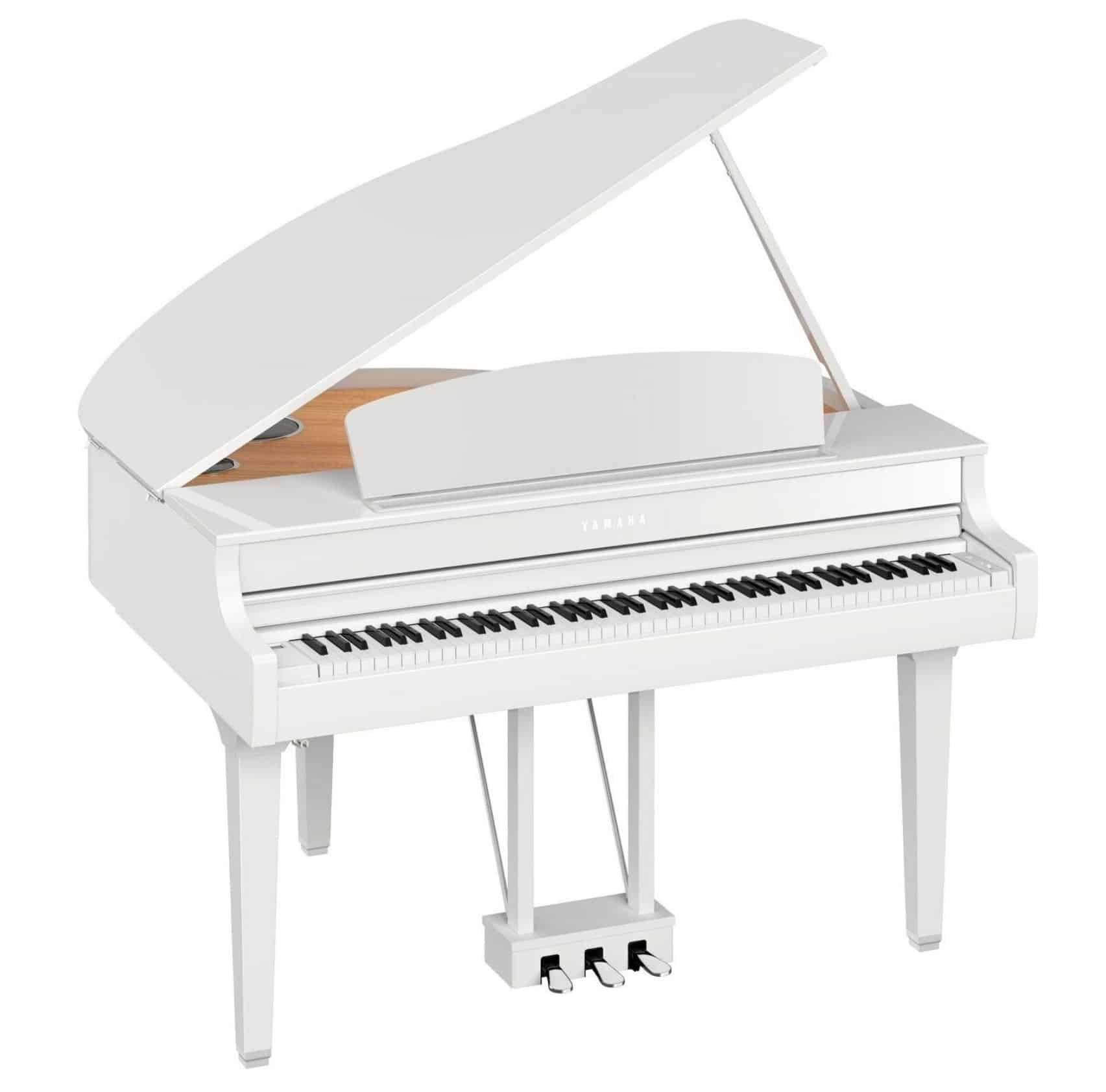
The sound of the digital piano has nothing to do with the electric piano, as it differs completely in its sonic character. In reality, the latter is a different instrument that has acquired its own dignity and is still very popular, especially in funk, jazz fusion, and pop.
The digital piano with samples is instead aimed at emulating the character of the acoustic piano, sometimes in a very convincing way.
Keyboard
The best digital piano keyboards are made of high-quality, high-density plastic, with micro-grained surfaces that, in addition to providing a natural feel, also prevent slipping and prevent sticking if your fingers are wet or sweaty. The most valuable, however, are made of wood, filled with custom counterweights and then covered in plastic materials that mimic the density and feel of ivory.
Keyboards typically have 88 keys, but there are also smaller variants with 73 or 76 keys.
Mechanics
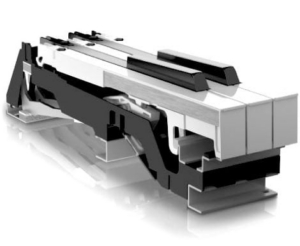
One of the strong points of new digital pianos is their action. Some models are inexpensive: the key isn't equipped with a graduated weight but rather a simple spring, so while they respond dynamically to the speed of the key's descent, they don't allow the pianist full control. Other models, however, are equipped with highly sophisticated action, composed of balance springs designed to reproduce the weight of the key and the action, and all the reactions experienced "under the fingers" on a real acoustic grand piano, including the hammer fall and the typical vibrations caused by the double escapement. Between the two extremes, there are also intermediate solutions, more modest in detail but still excellent.
Pedals
Digital pianos can now feature three pedals equivalent to those on a grand piano. Some even offer a half-pedal effect, which, in emulation of the acoustic version, suggests the reaction caused by touching the strings with the dampers without stopping them completely.
Sound generation and quality
Compared to its electronic synthesis-based predecessor, which lacked sound quality and dynamic control, each time the corresponding key is pressed, the digital piano plays a high-quality recorded sound sample. Each note now actually corresponds to at least three samples, corresponding to the same note played in the pianissimo, fortissimo, and medium-intensity registers. These three samples are managed by a microprocessor which, through a complex algorithm based on the analysis of real physical models, reconstructs the sound response at all intensities, providing highly realistic feedback on all 128 gradations reproducible by the standard sound generation system, or even more, as in the top-of-the-line models.
The best models also simulate the noises generated by the key stops and pedal movements, noises that are sometimes adjustable in intensity. They also allow the treble strings to vibrate freely (as if they didn't have dampers, similar to acoustic pianos) and to more or less authentically recreate the complex system of grandiose resonance experienced with the sustain pedal depressed.
Acoustic diffusers
All models allow stereo listening via headphones, in addition to the electro-acoustic signal output for routing to an external speaker system or for in-line recording; moreover, almost all have a speaker system built into the cabinet.
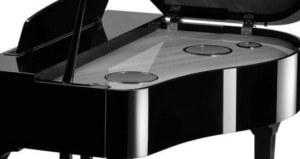
The quality of the built-in speaker system can vary greatly from model to model; it is more or less good but a bit rough in the small "wall" digital piano models, while it is generally more refined in the models with a grand piano or a piano stand, also taking advantage of the larger dimensions of the speaker cabinet, which allows for a better response to low frequencies and diffusion via multiple appropriately positioned speakers, emulating the spatial diffusion of an acoustic instrument; in this sense, some top models from large specialized manufacturers are excellent.
For further reading, see Alessandro Fois’s catalogue:
A selection of manuals and publications dedicated to audio, music, music production and technical training.
https://alessandrofois.com/wp-content/uploads/2025/06/clp795gpwh-111.jpg16831705Alessandro Foishttp://alessandrofois.com/wp-content/uploads/2025/06/Logo-Alessandro-Fois-Solid-Web.pngAlessandro Fois2023-06-06 00:42:112026-07-30 20:42:23Structure of the digital piano
0replies
Leave a Reply
Want to join the discussion? Feel free to contribute!
We may request cookies to be set on your device. We use cookies to let us know when you visit our websites, how you interact with us, to enrich your user experience, and to customize your relationship with our website.
Click on the different category headings to find out more. You can also change some of your preferences. Note that blocking some types of cookies may impact your experience on our websites and the services we are able to offer.
Essential Website Cookies
These cookies are strictly necessary to provide you with services available through our website and to use some of its features.
Because these cookies are strictly necessary to deliver the website, refusing them will have impact how our site functions. You always can block or delete cookies by changing your browser settings and force blocking all cookies on this website. But this will always prompt you to accept/refuse cookies when revisiting our site.
We fully respect if you want to refuse cookies but to avoid asking you again and again kindly allow us to store a cookie for that. You are free to opt out any time or opt in for other cookies to get a better experience. If you refuse cookies we will remove all set cookies in our domain.
We provide you with a list of stored cookies on your computer in our domain so you can check what we stored. Due to security reasons we are not able to show or modify cookies from other domains. You can check these in your browser security settings.
Other external services
We also use different external services like Google Webfonts, Google Maps, and external Video providers. Since these providers may collect personal data like your IP address we allow you to block them here. Please be aware that this might heavily reduce the functionality and appearance of our site. Changes will take effect once you reload the page.
Google Webfont Settings:
Google Map Settings:
Google reCaptcha Settings:
Vimeo and Youtube video embeds:
Privacy Policy
You can read about our cookies and privacy settings in detail on our Privacy Policy Page.



 Italian
  English
  French
  Spanish
  German
Leave a Reply
Want to join the discussion?Feel free to contribute!