
Mastering Guide for Streaming: Normalisation, LUFS and Loudness(Letto 1,410 volte)

With digital music consumption expected to rise by 2023, it's never been more important to understand how to optimize mastering for platforms like Spotify, Apple Music, and more. This detailed guide will walk you step-by-step through understanding and applying essential concepts like loudness, LUFS, and normalization to ensure your music sounds its best wherever it's listened to.
What is Loudness and Why is It Important in Mastering?
Definition of Loudness
Loudness represents the perception of a sound's volume, but it's not an absolute concept. It depends on:
- The sound pressure level (SPL) in the environment.
- The characteristics of audio, such as frequency distribution.
- The individual sensitivity of the listener.
To measure loudness objectively in the digital domain, tools such as loudness meters, which adopt universal standards to quantify perception.
LUFS: The Standard for Loudness Measurement
LUFS (Loudness Units Full Scale) is the globally recognized unit of measurement for perceived loudness. LUFS meters simulate human hearing through a process called K-weighting, That:
- Attenuates frequencies below 100 Hz.
- Amplify those above 2 kHz.
LUFS meters offer five main metrics:
- Momentary Loudness: Measures RMS level over a 400 ms time window.
- Short-Term Loudness: Similar to the previous one, but on a 3 second window.
- Integrated Loudness: Calculates the weighted average of a song, excluding very low signals (-70 LUFS) and very quiet moments (-10 LU compared to the average).
- Loudness Range (LRA): Evaluates the dynamics of a piece, from high levels (e.g., classical music, 20 dB) to extreme compression (e.g., metal, 3–4 dB); in modern pop, an average of around 5–8 dB can be considered the optimal balance between the need for compression and respect for expressive dynamics.
- True Peak: Measures the actual peaks of a digital signal, taking into account any distortion introduced by digital-to-analog conversion (DAC).
K-weighting: A filter introduced in the ITU-R BS.1770 (2006) standard by the International Telecommunication Union (ITU) to measure perceived loudness. It simulates human sensitivity by attenuating frequencies below 100 Hz and boosting those above 2 kHz. Based on previous studies such as A-weighting, it improves the representation of loudness in professional contexts, such as broadcasting and streaming. Developed in collaboration with international experts, including Eelco Grimm and Thomas Lund, it is designed to offer a more accurate and consistent measurement of listeners' actual perception.
Normalization: What It Is and How It Affects Mastering
The Concept of Normalization
Normalization adjusts a song's loudness to a predefined level to ensure a consistent listening experience. Streaming platforms often use the integrated loudness (LUFS) as a reference, not the maximum peaks. This ensures that volume variations between songs are minimal, providing a pleasant and consistent listening experience.
The Goal of Normalization
The goal isn't to standardize the work of sound engineers, but to offer the end user a consistent experience. However, standardization allows sound engineers creative freedom, because:
- More dynamic pieces (such as classical music, traditional jazz, and more “orthodox” world music) can retain their naturalness.
- More compressed songs (such as pop, dance, metal and others) can reach higher loudness levels, which are then adapted by the platform.
Mastering for Streaming Platforms
Should I Burn at -14 LUFS?
Not necessarily. While many platforms have a benchmark of -14 LUFS, it's not mandatory. Here are some considerations:
- Artistic Intention: Sound quality and artistic coherence must be a priority.
- Differences between Platforms: Apple Music uses -16 LUFS, Deezer -15, and Pandora does not rely on LUFS.
- Evolving Specifications: Reference levels may change over time.
The best approach is to create a master that maximizes the song's sonic potential, without sacrificing dynamics or quality. However, it's worth noting that, in 2024, the music industry's mastering trend is between -9 and -7 LUFS.
This approach seems to resurrect the nefarious practices implemented during the period of the Loudness War, partially abandoned around 2005. In fact, high levels of compression in mastering seem to have come back into fashion in pop music especially starting from the 2020s, obtaining however better results than then, thanks to improved digital tools and the greater efficiency of step-by-step control techniques, which can be carried out during the mastering process,
True Peak Management and Album Balancing
The True Peak represents the maximum level that an audio signal can reach after conversion from digital to analog. Strict control of this parameter is crucial to avoid clipping and distortion, especially with the spread of lossless streaming, which fully preserves the original signal.
Lossy Streaming
Lossy formats, such as MP3 and AAC, reduce file size by eliminating sound information, but compression can generate upper peaks to the levels visible in the original files. To prevent unwanted artifacts during playback, it is recommended to keep the True Peak below -1 dBTP, leaving enough margin to compensate for any over-peaks introduced by the encoding process.
Lossless Streaming
In the case of lossless streaming, which uses codecs such as FLAC or ALAC to transmit audio without loss of quality, the signal maintains full fidelity to the original source. However, tighter control of peak levels is necessary. The traditional limit of -0.3 dBTP, typical of CD mastering, may not be sufficient to ensure flawless playback, especially on sensitive devices. It is therefore recommended to keep the True Peak below -1 dBTP for greater safety.
NB: In extreme cases, such as heavily compressed or very low bitrate audio, some headroom may be needed. -2 dBTP to avoid distortions.
Recommended Mastering Chain
To ensure True Peak control and prevent problems in any context, we recommend:
- A standard limiter set to -1 dBFS to manage general levels.
- A True Peak limiter configured to -1 dBTP (or lower in more complex cases) to specifically avoid clipping.
Careful control of True Peak not only ensures distortion-free audio, but also preserves sound quality, making the song compatible with all playback platforms and devices, both lossy and lossless formats.
Album Balancing
For albums, platforms follow two approaches:
- Track Normalization: Each song is normalized individually (Amazon, YouTube, Deezer).
- Album Normalization: The entire album is scaled to the loudest or average level (Spotify, Apple Music).
This preserves the dynamic balance intended by the artist, but suggests that the mastering engineer perform a careful balance check between the perceived volume ratios within the same album.
The choice between the two approaches is specified in the following table, in column Mode.
Loudness Specifications for Major Platforms
Here is a table that includes loudness specifications and True Peak levels for major streaming platforms, SoundCloud, and audio CD:
Note:
- SoundCloud: Does not apply loudness normalization and does not specify a reference level in LUFS. However, it is recommended to keep True Peak at -1 dBTP to avoid distortion during playback.
- Audio CDThere is no LUFS standard for audio CDs. Traditionally, the maximum allowed peak level is 0 dBFS. However, many professionals prefer to keep the True Peak level at -0.3 dBFS to prevent clipping during playback on different devices.
Final Guidelines for Optimal Mastering
- Serve the Music: Mastering loudness must respect the artistic intention and not bend to rigid standards.
- Manage Levels: For pop music, an integrated level of around -12 LUFS, with peaks below -1 dBTP, works well on all platforms, but is less suitable for the typical audio CD and SoundCloud practices; furthermore, it's good to know that in pop and related genres, the trend for 2024 is a target of -9/-7 LUFS. For highly dynamic genres like classical music, it's often better to aim for values between -23 LUFS (maximum purist approach) and -14 LUFS (maximum progressive approach), but in this case, compression applied across the entire dynamic range of the song is better than using "wild limiting" on the peaks.
- Preserve Dynamics: Don't sacrifice dynamics to bring loudness closer to arbitrary reference levels, keep the LRA high enough for the music.
- Maintain maximum cleanliness in sound and dynamic coherence, absolutely avoiding all of the following drawbacks:
- “Mechanical” distortion caused by the limiter's intervention rating: if you use a zero attack time, always use the maximum LookAhead value; if you use a slower attack to better preserve transients, you can decrease it to obtain greater loudness
- the “breathing” of the compressor (that is to say the sudden reduction of the volume after each peak, and then the consequent more or less rapid but audible rise in volume
- Where the above cannot be avoided, compress the entire dynamic range of the song before the limiter intervenes, using a very low ratio (maximum 2:1, but often much less is sufficient, which also allows you to use very fast attack and release values); this way, the limiter intervention will be more moderate, preventing the problems mentioned above.
- Perform detailed mastering editing: If a specific point in the song causes you dynamic problems that are difficult to resolve during the mastering phase, you could apply (using automation) different volume, compression or limiting parameters only at those specific points (sometimes even a drastic intervention lasting a few milliseconds may be necessary, to silence the excess of an extreme peak of short duration, without significantly reducing the impact of the transient); if the same problem occurs only at specific frequency ranges, you could use (before limiting) a compression targeted only at that specific tonal range.
With these guidelines, your mastering, in the dynamic field, will be technically accurate and musically respectful, adapting to both current and future standards.
Tonal balance in mastering
See also this other blog article
Mastering for Streaming Platforms: Balanced EQ and More
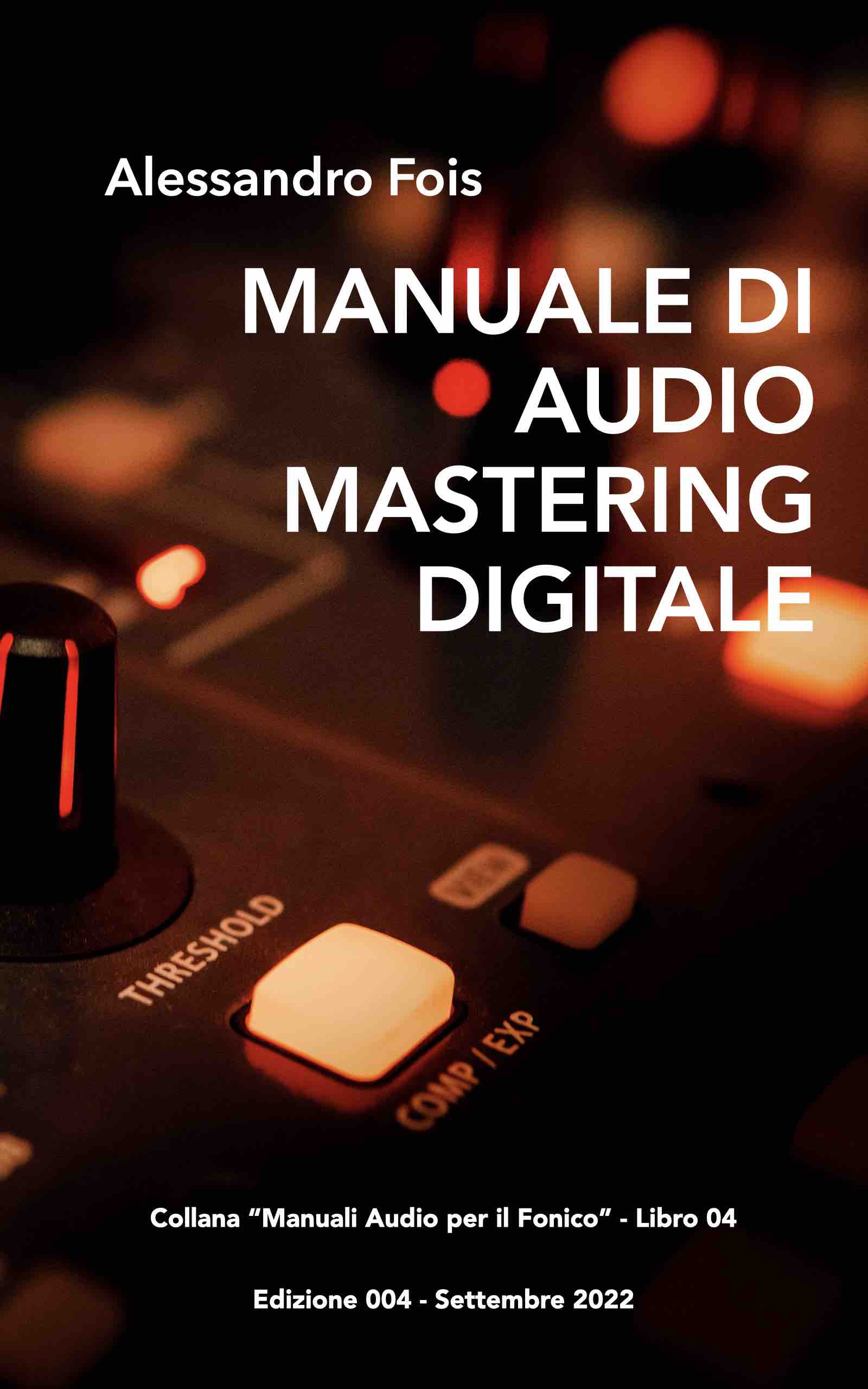
For further reading, we recommend these publications:
FabFilter Pro L2 - Illustrated PDF Manual in English, Italian, French and Spanish

 Italian
  English
  French
  Spanish
  German
Leave a Reply
Want to join the discussion?Feel free to contribute!