
Post-Recording Audio Operations: A Complete Guide for Musicians, Podcasters, and Creators(Letto 142 volte)

You've recorded a song, a voiceover, a podcast, or a video. But something just doesn't add up. The volume is off, the voices are muffled, there's background noise, or it just... sounds unprofessional. It's a common situation, and it doesn't depend on the quality of the content, but on an often overlooked factor: post-recording audio operations.
This term refers to the set of technical operations that transform a raw audio file into a refined, coherent, balanced product ready for publication. Whether you're a musician, podcaster, or content creator, knowing and managing these operations can make the difference between content that gets listened to and content that gets ignored.
This comprehensive guide explains, very briefly:
- what are post-recording operations,
- which phases do they include (editing, mixing, mastering),
- because they are crucial,
- and when it is best to rely on an expert technician.
Index
- What is a post-recording audio operation?
- The three main phases:
Editing
Mixing
Mastering - Why you should take good care of your audio after recording
- Who really needs these operations?
- When it's best to do them yourself
- When is it best to contact a professional?
- How an audio engineer works
- Conclusions and useful resources
What is a post-recording audio operation?
Recording is just the first step. Even a good recording can be unusable if not handled properly. Post-recording operations are what allow an audio file to go from "rough" to "complete."
It's a technical process, not strictly creative, but closely tied to sound perception. It involves cleaning, balancing, compressing, and optimizing sound material so that it sounds good. on every device and in every context.
Bottom line: if the listener has to turn up the volume or strain to understand what's being said… something's gone wrong.
The three main phases of post-recording audio operations
1. Editing
This is the cleaning and preparation phase. It includes:
- Removal of unnecessary clicks, pops, noises, breathing and silences
- Choosing and editing the best takes
- Timing or intonation correction (when necessary)
- Preparing tracks for mixing
The goal of editing is to get your tracks ready, clean, and organized. Skipping this step will irreparably compromise the final quality of the mix.
2. Mixing
Mixing is the process of combining and balancing tracks to create a single, coherent, and three-dimensional sound. It includes:
- Gain staging: correct starting level for each track
- Preliminary equalization: eliminate resonances and deficiencies in the recorded sounds, caused by poor instrument setup, imperfect acoustics of the recording room, and miking errors
- Balancing: volume levels between tracks
- Equalization (EQ): shape the timbre of each sound, especially in relation to demasking
- Compression: control the dynamics
- Special Effects: reverbs, delays, ambiences
The mix is where the project really starts to "sound." A well-mixed track is already ready for the public at 90%.
3. Mastering
Mastering is the final touch, essential for:
- Smoothing perceived loudness (LUFS)
- Check the stereo balance
- Adapt the file to distribution standards (streaming, CD, video, etc.)
- Ensure consistency across multiple songs (in an album, a serial podcast, etc.)
It is also the stage where the content is verified to sound good everywhere: on speakers, headphones, smartphones, TVs, cars.
Why you should take good care of your audio after recording
The average listener today has high expectations, even without realizing it.
- A poorly defined speech tired and abandoned.
- A unbalanced music makes a song feel “poor.”
- A content that sounds bad on some devices it is perceived as amateurish.
In short: good content, poorly recorded, is a wasted opportunity. Something so-so but well-produced can surprise. And win.
Who needs post-recording operations?
To anyone who records something intended for public listening.
🎵 Independent musicians and producers
- Optimization for Spotify, Apple Music, YouTube
- Mix control on every medium
- Correcting imperfections recorded in home studio
🎙️ Podcasters
- Speech clarity
- Balancing between multiple voices
- Removing noise and hiss
- Optimized for mobile listening
🎧 Voice actors and voice-over artists
- Stamp enhancement
- Sound consistency across multiple sessions
- Cleanliness and broadcast quality
📹 YouTuber and content creator
- Volume consistency between clips
- Improved professional perception of the channel
- Reduction of dropout rate
DIY or professional?
It depends on:
- Your technical level
- The complexity of the content
- The time available
- The aim of the project
💡 Signs that you need help:
- The final volume is still too low
- The voice is not clear
- Sounds good in headphones but bad elsewhere
- You keep changing things but nothing gets better.
- You're using random presets
- You have a deadline and you're late
In these cases, delegating to a technician is the most rational choice.
How an audio engineer works
An expert technician doesn't apply simple presets. He does:
- Preliminary analysis of the material
- Tailor-made choices for every project
- Cross-check quality (monitors, headphones, different environments)
- Targeted technical interventions
- Loudness optimization for each platform
Plus, it often offers a revision included, to accommodate customer feedback and specific needs.
Conclusions
Recording is important. But finishing is at least as important as recording.
Post-recording audio operations represent the bridge between what you've created... and what will actually be heard.
🔹 Do it all yourself, if you have the time, skills, and desire.
🔹 Or rely on a technician, if you want a reliable, professional result and ready in a certain time.
Useful resources
- 🧰 Professional Recording, Editing, Mixing and Mastering Manuals
- 🎧 Editing, mixing, mastering service
- 📚 Personalized online lessons and consultations
Per approfondimenti ti segnaliamo questa pubblicazione:
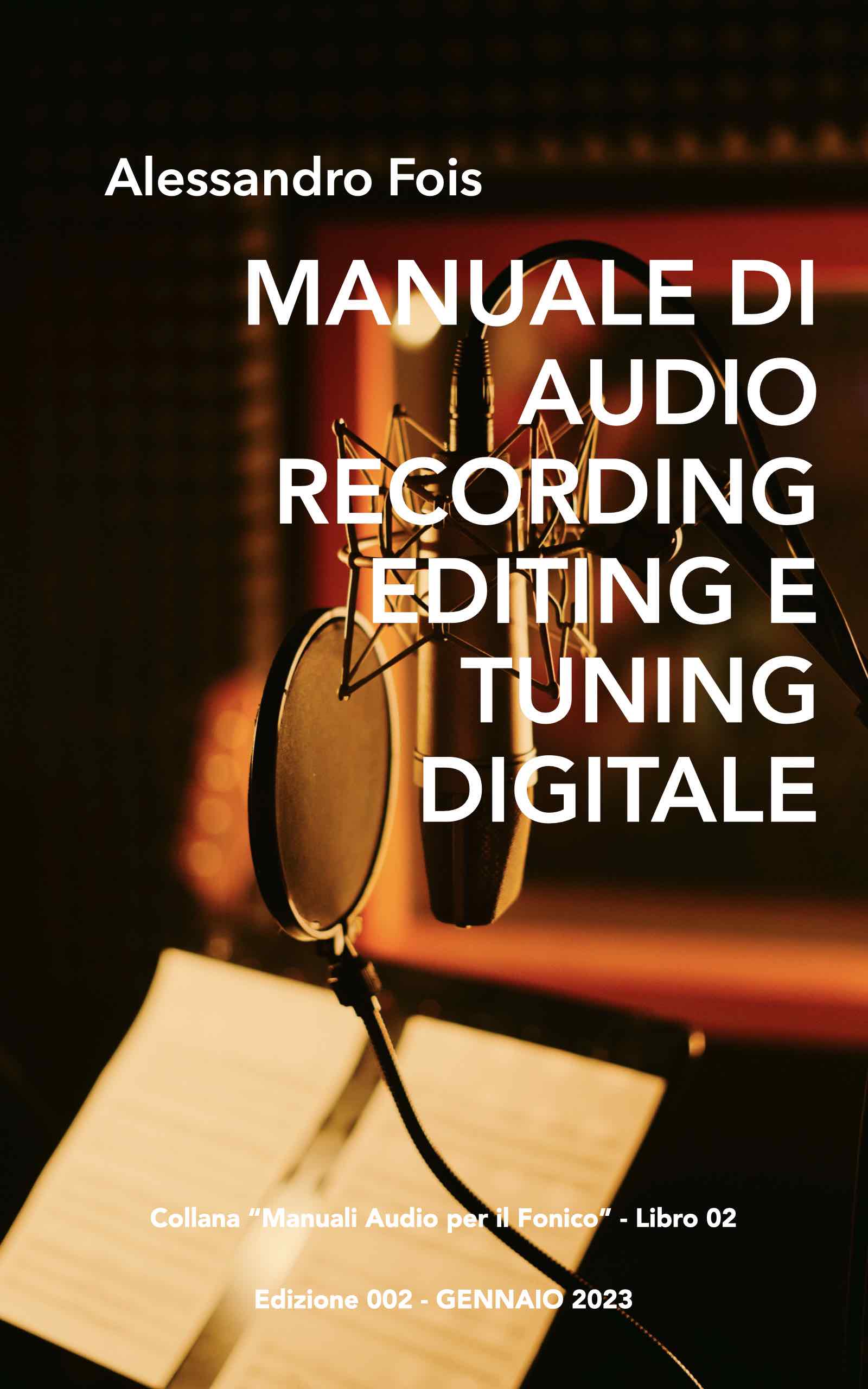
A Handbook on Digital Audio Recording, Editing and Tuning
 Italian
  English
  French
  Spanish
  German
Good morning, Alessandro. I just wanted to thank you for the simple, to-the-point guide you sent me. I do believe these three steps are, in fact, at the heart of audio recording. Thanks again.
See you later ;)
Good morning, Danilo. I’m glad you’re happy with it. A simple, more practical way to thank me, if you can, is to share the books and blog posts on my website via your social media and by telling others who might be interested. Best wishes, and see you soon.