
Debunking myths and urban legends about modern recording(Letto 122 volte)

1. Prestige is not the same as quality
One of the most persistent misconceptions in professional audio is the belief that the prestige of the equipment automatically equates to the quality of the result. A legendary microphone, a renowned preamp, a prestigious analogue mixing desk or a vintage compressor all possess charm, history and authority. It is only natural to be drawn to them: certain pieces of kit seem to promise quality even before they are switched on.
But sound is not affected by the cost of the equipment.
Your ears don’t care about the preamp’s make, the cost of the converter or the rarity of the compressor. They can tell whether a voice connects, whether the drums have life, whether the bass underpins the track, and whether the mix moves you or tires you out. Everything else – brand, prestige, ritual, cost, studio aesthetics – only matters if it translates into an objective result of merit.
This is the crux of the matter: a fascinating process does not guarantee a better sound. It can help, inspire, speed things up, and put a musician in the right frame of mind. But it can also become mere window dressing. The sound engineer may feel more professional when working with high-end equipment; the listener, however, will not appreciate that personal feeling, but only what actually comes across in the music.
Today, this distinction is even more important, because the technical gap between affordable equipment and top-of-the-range systems has narrowed considerably. Once a decent standard has been reached, the “bottleneck” is almost never the lack of a legendary piece of kit. It is far more often down to the quality of the performance, the environment, the choice of microphone, the positioning, gain staging, monitoring, technique and critical listening.
The professional question should no longer be: “How prestigious is this processor chain?”. It should be: “Does this choice actually improve the audible result, or does it merely satisfy my emotional preferences?”.
2. The first piece of hardware is the musician
Before the microphone, before the preamp, before the converter and before any plug-ins, there is an often-forgotten truth: sound is produced by someone. The singer, the drummer, the bassist, the guitarist and the pianist are not simply “sources” to be captured. They are the first link in the audio chain.
A singer who controls their vocal delivery, distance from the microphone, dynamics, consonants, breath control, intention and timbre already produces a different result to an insecure, erratic or unaware singer. No microphone costing thousands of euros can truly transform a fragile vocal delivery into a great vocal performance. It can enhance it, soften it, refine it; it cannot invent it.
The same applies to the instruments. Two drummers can sit at the same kit, on the same stage, with the same tuning, microphones and settings. One will produce a decent sound, the other a fantastic one. The difference lies in where they strike the drums, in their control of the rebound, in the balance of volumes between the various parts of the kit, and in the internal dynamics of the groove. Even before the sound engineer steps in, the musician is already mixing their own sound.
This also applies to a bass player who can control attack and sustain, to a guitarist who can modulate touch and volume, and to a pianist who can make their performance rich and expressive. Sound quality is not produced once the signal has entered the cable. It arises from the performer’s playing style.
That is why it is misleading to place too much responsibility on the technical set-up and too little on the performance. A great sound engineer can capture, guide, enhance and make partial corrections. But if the source does not produce a musically credible sound, technology can only mask the problem; it cannot solve it at its root.
The top priority in a professional production, therefore, is not to choose the most prestigious preamp. It is to enable the musician to play or sing to the best of their ability.
3. Environment, microphone and position: where the real decision is made
The environment comes immediately after the human performance. A problematic room can ruin a recording more than a cheap preamp. Early reflections, resonances, flutter echoes, bloated low frequencies, harsh highs and muddled reverb tails all enter the microphone alongside the sound source. A great microphone in the wrong room will still capture a poor sound perfectly well.
On the contrary, a more modest microphone in a skilfully controlled environment will produce surprisingly professional results. This is one of the least glamorous yet most important truths about recording: often you don’t need a more expensive piece of kit; you need a room that’s less detrimental.
Next comes the microphone, but here too the myth needs to be put into perspective. There is no such thing as the absolute best microphone. There is, however, the microphone best suited to that particular voice, that particular room, and that particular track. A legendary model can sound magnificent with a full-bodied voice and terrible with a thin one. A nasal or shrill voice can sound worse if the microphone emphasises that very critical range; a thin voice may need a rubbery resonance to gain body; a dark voice may require openness; an aggressive voice may need control rather than presence; and it is not just a matter of frequency response, but of how the microphone reacts to the various volume and frequency demands that make up its unique response profile, which is often substantially different from that of another microphone.
An equaliser can refine the sound, but it cannot always undo the way the microphone has interpreted reality. If a voice has been captured sounding harsh, tinny or lacking in body, it is possible to correct this to some extent, but often at the expense of naturalness, definition or presence.
And then there’s the recording position, one of the most underestimated factors. A few centimetres can affect the result more than changing the preamp. Moving a microphone onto the cone of a guitar cabinet, angling it in front of an acoustic guitar, adjusting the distance from a vocal, controlling the proximity effect and deciding how much room resonance to let into the microphone: all of this is already part of the mix. That’s where you decide how much air, body, attack, depth and ambience will be captured in the file.
A real leap in quality almost never comes from buying a more prestigious piece of equipment. It comes from listening more carefully to what happens before the recording, and skilfully and patiently improving everything that isn’t yet optimised.
4. Analogue: reality, myth and misunderstanding
Analogue deserves respect. It has shaped a huge part of the music we love and possesses genuine qualities: headroom, progressive saturation, musical response to transients, physicality, immediacy, and the ability to force decisions based on its limitations and potential. A good analogue circuit can make a vocal sound richer, a bass more compact, and drums more lively. With certain sources, pushing a piece of kit in the right way produces character, not just distortion.
But the analogue world is also where the confusion between charm and quality has become most pronounced. For decades, it wasn’t an aesthetic choice: it was the only way to record. Mixing desks, tape, outboard gear, compressors and physical reverb units weren’t “vintage”; they were the standard equipment of the day! The sound of records from that era also stemmed from the limitations of the medium: noise, saturation, limited bandwidth, a finite number of channels, difficult editing and imprecise recall.
Part of the magic was real. Part of it was a compromise. And not everything that seems romantic today was, in day-to-day work, a virtue. Noise isn’t always warmth. Irreversibility isn’t always courage. Maintenance isn’t poetry. Manual recall isn’t art. The price you pay for every input and processing channel isn’t musical quality.
The discipline of analogue recording also stemmed from scarcity: you had to make quick decisions, prepare yourself, play well and not waste time. This could foster concentration and character. But to equate that scarcity with absolute superiority is a mistake. Today, we are no longer forced to endure those limitations. We can choose analogue when it offers a real advantage, not because some myth tells us that without it the result will be less professional.
Nowadays, analogue is often synonymous with luxury, identity, expression, colour and experience. It can be a genuine creative tool when it is capable of inspiring positivity and encouraging choices. But it is no longer a technical prerequisite for achieving a credible result; indeed, the opposite is now more true.
5. Mature digital technology has changed the way things are done
Digital technology wasn’t perfect from the outset. The first generations of converters, workstations and plug-ins had real limitations: a stiff sound, annoying latency, finicky clocking, and immature plug-ins. The initial scepticism wasn’t just down to nostalgia. In many cases, it was justified.
But that world is not the world of today. Converters, interfaces, DAWs and plug-ins have reached such a level of maturity that even a very affordable signal chain can be professional, if used properly. 24-bit recording provides ample dynamic headroom. There’s no need to chase the digital zero. There’s no need to record “loud” to overcome noise. What’s needed is to record a sound that’s healthy, clean, rich and malleable.
This is a huge turning point. Previously, many sonic characteristics were inevitable consequences of the medium. Today, they are choices. You can record a clean vocal track and decide afterwards just how warm, aggressive, compressed, bright, intimate or saturated it should be. You can compare, automate, duplicate, process in parallel, go back, reopen a session and find everything exactly as you left it.
Recording cleanly does not mean recording coldly. It means not damaging what matters. An emotionally powerful take that is ruined by clipping, excessive compression or incorrect saturation becomes a serious problem. A clean, dynamic take that is well-positioned and well-executed, on the other hand, is lively, versatile and reliable material.
The priority in tracking should be clear: to protect what cannot be easily recreated. Interpretation, timing, phrasing, energy, intention, intonation, genuine dynamics. Colour can come later, with greater clarity and more context.
It’s not a lack of decisiveness. It’s about choosing the right moment to make a decision.
6. Preamps, converters and clocks: important, but rarely decisive
Preamplifiers, converters and clocks do matter. But in popular discourse, they are often given more weight than they actually have on the final result.
A good preamp must be quiet, stable, and offer sufficient gain and adequate headroom. The differences become significant with low-output microphones, weak sources, extreme transients or intentional saturation. But for almost all recordings, with correct levels and a suitable microphone, a decent modern preamp is certainly not the bottleneck in the final result.
The same applies to converters. In a real-world mix, the differences between a decent model and a top-of-the-range one costing ten times as much are generally indistinguishable. Top-of-the-range converters offer tangible benefits: drivers, routing, latency, stability, dynamics, build quality and reliability. But they won’t turn a mediocre take into a great recording, because they don’t significantly affect the sound.
A great deal of technical fetishism stems from the desire to find a simple cause for a disappointing result. But often the cause is not the converter, the preamp or the microphone. It is a poor room, the wrong microphone, a lacklustre positioning, a weak performance, unreliable monitoring or a decision made without proper judgement.
7. Plugins and hardware: the operational battle has already been decided
From an economic and operational point of view, modern plug-ins have already won the day. This does not mean that every plug-in sounds exactly like the hardware it emulates, nor that the hardware no longer has any value. It means that, for most productions, digital flexibility is simply unbeatable.
For just a few hundred euros, you can get compressors, EQs, saturators, reverbs, delays, limiters and creative tools that can be used on dozens of tracks. In the analogue world, achieving the same level of flexibility would require huge investment, space, cabling, maintenance and manual recall. A hardware compressor is a physical piece of kit: if you have one, you can only use it on one channel at a time. A plug-in can be duplicated, automated, saved, recalled and compared in a matter of seconds.
The right question isn’t whether the plug-in is identical to the original: that’s a false comparison, because an emulator will always be slightly different. But different doesn’t mean worse. The useful question is: does it work in the mix? Does it make the vocals sound better? Does it make the bass sound more solid? Does it give the drums the right punch? If so, it’s a useful tool.
Hardware remains valuable when it offers something tangible: a specific colour, a faster response, a more focused decision, an identity, or a positive psychological effect on the musician. But buying hardware simply to feel more professional is an expensive form of self-suggestion.
One of the smartest compromises in recording these days is “coloured” listening alongside “clean” recording – that is, without filters. The singer hears a voice that’s EQ’d, compressed and reverb-treated – already sounding a bit like a ’recorded“ track – whilst the DAW records a clean, reliable direct signal. The musician feels inspired and the performance benefits as a result; the sound engineer retains headroom for the subsequent mix. It’s the best of both worlds, provided latency is kept under control.
Latency was an unknown problem in the analogue era, having emerged alongside digital DAWs, and overcoming the issue requires intelligence and knowledge: low buffer sizes, lightweight sessions, plugins with minimal latency (max 64 samples) suitable for the tracking phase, no plugins on the master, using freeze to avoid overloading the computer’s CPU, shared aux sends for parallel tracks such as backing vocals, to be routed to stereo groups. The art of sound engineering has not disappeared. It has shifted from managing the physical patchbay to the intelligent management of the modern digital session.
8. Less superstition, more method
The world of professional audio is full of sayings that sound wise simply because they’ve been repeated for years: you need a great preamp; converters make all the difference; hardware beats plugins; analogue is warm, digital is cold; and a famous microphone is always superior. There is sometimes a grain of truth in these sayings. But a grain of truth turned into a general rule becomes an urban myth.
The method is designed precisely to avoid self-deception. The measurements do not tell the whole story, but they do reveal a great deal: noise, distortion, dynamics, phase, stability. Listening remains the decisive factor, but it must be approached in a disciplined manner. Many comparisons are skewed by volume: what is just a little louder often seems better. The brand influences our judgement, and the price even more so. The very physical nature of the equipment influences us, as does its historical – and sometimes legendary – reputation.
This is why it is important to make comparisons without bias but using an objective method, assessing the results achieved in the mix as well as listening to “solo” tracks, being wary of overly immediate impressions, and always asking oneself whether the presumed quality of a piece of equipment really does have a significant impact on the final result.
Digital technology does not stifle creativity. It protects it from illusions.
9. The modern sound engineer is the director of the final result
The modern sound engineer no longer stands out simply for owning legendary pieces of kit, because these days they are far more easily replaceable than they used to be. As a result, the focus has now shifted to the sound engineer’s professionalism and their ability to make the right choices.
The sound engineer must be familiar with DAWs, plug-ins, routing, latency, file formats, backups and session management. But above all, they must understand the track. They must know when a take is alive even if it’s imperfect, when it needs to be redone, when it needs to be corrected, and when it needs to be left to breathe. They must create a headphone mix that makes the musician sound their best.
A session isn’t a sterile laboratory. There are people, insecurities, tiredness, egos and expectations. A singer can only give their best if they feel secure. A drummer plays differently if they feel a solid foundation through their headphones. An artist can freeze up if their flow is disrupted by technical indecision or constant minor corrections.
The true master sound engineer is not the one who flaunts the most hardware as if it were a display of “muscle”. It is the one who facilitates the creation of the right take, who optimises the audio material and records it authentically, whilst offering the performer a stimulating and creative working environment and listening experience; and then, when it comes to mixing, it is the sound engineer who understands the tools at their disposal and knows how to select them with clear judgement to achieve a significant result that will stand the test of time.
In the digital realm, moreover, you need to know what not to do. Every track can be processed, corrected, duplicated, stretched, tuned or saturated. But more processing does not necessarily mean better quality. Often, the result improves when you remove elements, simplify things and preserve the original intention.
True modern competence is this: having a wide range of tools, knowing them inside out, and not becoming a slave to them.
10. Creative responsibility
The conclusion is simple, but uncomfortable: there are fewer excuses these days. Even if readily available equipment can produce professional results, we cannot blame every shortcoming on the absence of that legendary piece of kit. We need to look further up the chain: the musician, the environment, the recording, the accuracy of the monitoring; and then the sound engineer’s expertise, approach and decisions.
Analogue can still be magnificent. A great preamp can be useful. A vintage microphone can be perfect. A hardware compressor can be inspiring. But none of these elements guarantees a great result; the truly important factors are quite different.
The mature future of music production is neither anti-analogue nor naively digital. It is pragmatic.
Use analogue when it’s really needed, when it inspires you in a positive way. Use digital for what it does best: control, recall, flexibility, precision and accessibility. Focus on the musician, the recording, the listening experience and the end result.
So, less mythology. More creative responsibility. True maturity does not lie in believing that the machine makes the record for us, but in knowing when a machine is genuinely needed, rather than identifying and resolving the real problems that lead to mediocre results.
For further reading, we recommend this publication:
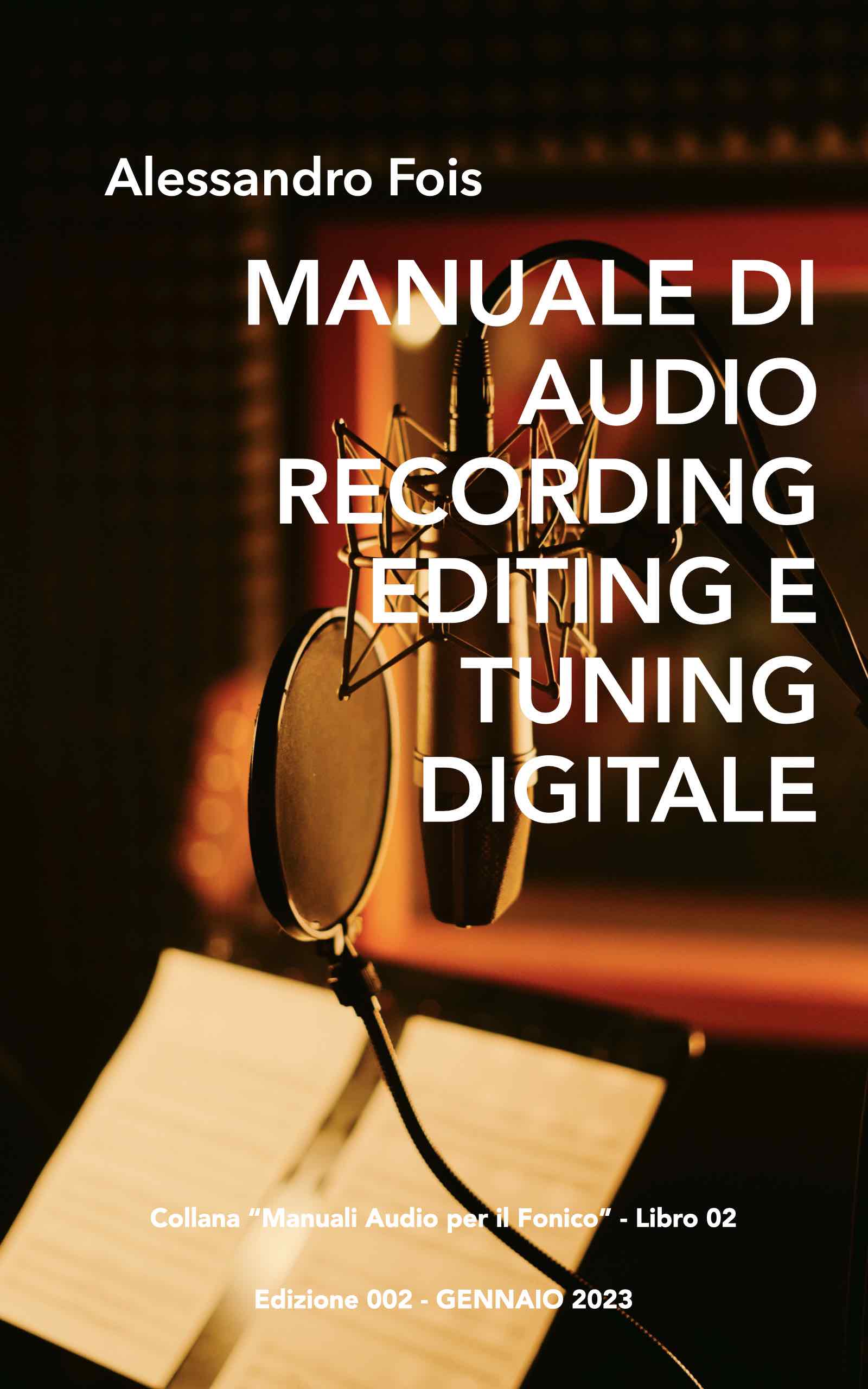
A Handbook on Digital Audio Recording, Editing and Tuning
 Italian
  English
  French
  Spanish
  German
Leave a Reply
Want to join the discussion?Feel free to contribute!